
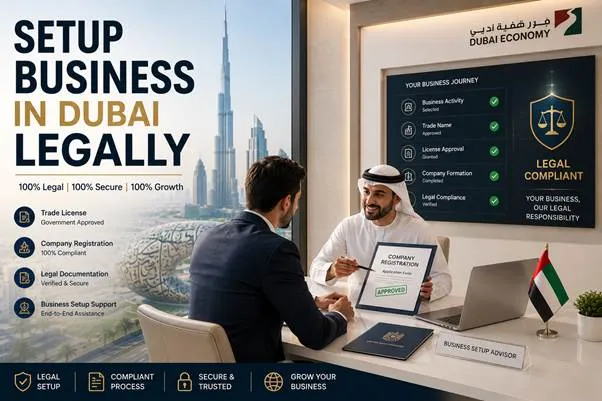
Establishing a business in Dubai presents a compelling opportunity for entrepreneurs and corporations seeking growth in a vibrant, strategically located market. The emirate’s pro-business environment, coupled with its world-class infrastructure, attracts investors from across the globe. Understanding the legal framework and procedural steps is crucial for a successful and compliant setup, ensuring your venture benefits from all the advantages Dubai offers. This article provides a clear roadmap for setting up your business legally, adhering to the required regulations and processes.
Key Takeaways
-
Dubai offers diverse options for business setup, including Mainland and Free Zones.
-
Choosing the correct legal structure and business activity is a foundational step.
-
Foreign ownership rules vary significantly between Mainland and Free Zone entities.
-
A clear understanding of documentation, licensing, and approvals is essential.
-
Visa processes for owners and employees are an integral part of the setup.
-
Meydan Free Zone offers an efficient pathway with attractive business packages.
-
Seeking professional advice often streamlines the entire company formation process.
Why Setup Business in Dubai Legally?
Dubai’s appeal as a global business hub is well-documented, drawing investors with numerous advantages. Setting up legally ensures access to these benefits while upholding regulatory compliance.
-
Economic Stability and Growth: The UAE boasts a robust and diversified economy, offering a stable environment even amidst global fluctuations.
-
Strategic Global Location: Positioned at the crossroads of East and West, Dubai serves as an ideal gateway to markets in the Middle East, Africa, and Asia.
-
Attractive Tax Regime: Many businesses benefit from 0% corporate and personal income tax, significantly boosting profitability.
-
World-Class Infrastructure: The emirate provides state-of-the-art facilities, including modern transportation networks, advanced communication systems, and high-quality commercial spaces.
-
Access to International Markets: Free trade agreements and a business-friendly policy framework facilitate international trade and expansion.
-
Diverse Talent Pool: Dubai attracts professionals from around the world, creating a multicultural and highly skilled workforce.
-
Ease of Doing Business: Continuous government initiatives aim to simplify processes and reduce bureaucratic hurdles for new businesses.
What to Setup Business in Dubai Legally?
Defining your business’s core aspects is the first step towards a legal setup. This includes identifying your activities and choosing the appropriate legal structure.
-
Business Activities:
-
Select from a wide array of activities permitted by the Department of Economic Development (DED) or respective Free Zone authorities.
-
Activities range from general trading, professional services, e-commerce, media, healthcare, and manufacturing.
-
Each activity requires specific licensing and may be subject to additional approvals.
-
Legal Structures:
-
Limited Liability Company (LLC): Popular for mainland operations, offering limited liability to shareholders.
-
Sole Proprietorship: Suitable for individuals offering professional services.
-
Civil Company: Formed by two or more professionals for specific professional services.
-
Branch Office / Representative Office: For foreign companies wishing to establish a local presence without forming a new entity.
-
Free Zone Establishment (FZE) / Free Zone Company (FZCO): Common in Free Zones, allowing 100% foreign ownership.
-
Company Name:
-
Must comply with specific DED or Free Zone naming conventions (e.g., no offensive terms, no religious references without permission, must reflect the business nature).
-
The chosen name needs to be unique and reserved with the relevant authority.
Who Can Setup Business in Dubai Legally?
Both individuals and existing companies, local or international, are eligible to establish a business in Dubai, provided they meet specific criteria.
-
Individuals:
-
Local UAE nationals.
-
Foreign expatriates (investors, entrepreneurs) holding valid passports and meeting visa requirements.
-
Specific professional qualifications may be required for certain regulated activities.
-
Existing Companies:
-
Local UAE companies looking to expand through branches or subsidiaries.
-
International companies aiming to establish a regional or global presence.
-
General Requirements often include:
-
Valid passport copies for all shareholders and managers.
-
Proof of residential address.
-
A no-objection certificate (NOC) if employed in the UAE and setting up another business (less common now).
-
Clean criminal record checks for certain business activities or nationalities.
Where to Setup Business in Dubai Legally?
The choice between a Mainland or a Free Zone company is a critical decision that impacts ownership, operational scope, and regulatory compliance.
-
Mainland Dubai:
-
Operational Scope: Businesses can operate anywhere within the UAE and directly engage with the local market without restrictions.
-
Ownership: Recent changes allow 100% foreign ownership for many activities. Previously, most LLCs required a 51% local sponsor. Some strategic sectors may still have ownership restrictions.
-
Regulation: Regulated by the Dubai Department of Economic Development (DED).
-
Office Space: Requires a physical office space.
-
Free Zones:
-
Operational Scope: Businesses can conduct international trade freely and typically operate within the specific Free Zone, or globally. Direct mainland operations usually require a local distributor or agent.
-
Ownership: Offer 100% foreign ownership, full repatriation of capital and profits, and exemptions from customs duties.
-
Regulation: Each Free Zone has its own governing authority and specific regulations.
-
Specialization: Many Free Zones specialize in particular industries (e.g., DMCC for commodities, Dubai Internet City for technology), while others like Meydan Free Zone offer general licenses.
-
Office Space: Flexible options from virtual offices to dedicated units.
When to Setup Business in Dubai Legally?
The timing for setting up a business in Dubai is generally flexible, given the stable economic environment and consistent government support for new ventures.
-
Market Readiness: It is advisable to commence the setup process once thorough market research validates your business idea and a solid business plan is in place.
-
Personal Readiness: Ensure you have secured the necessary capital, resources, and a dedicated team to support the new venture.
-
Economic Climate: Dubai’s economy consistently shows growth and stability, making most periods opportune for investment.
-
Timeline: The entire setup process can range from a few days for straightforward Free Zone registrations to several weeks for more complex Mainland entities requiring multiple external approvals. Planning ahead for documentation and capital is crucial.
How to Setup Business in Dubai Legally?
How to setup your business in Dubai involves a structured process, regardless of whether you choose the Mainland or a Free Zone. Following these steps systematically will ensure a smooth and legal establishment.
-
Step 1: Define Business Activity and Legal Structure.
-
Clearly identify all commercial activities your business will perform (e.g., IT consulting, general trading).
-
Based on these activities and your ownership preferences, choose between a Mainland or Free Zone entity, and the specific legal form (e.g., LLC, FZE).
-
Step 2: Reserve Your Company Name.
-
Select a unique business name that adheres to the naming guidelines of the DED or the chosen Free Zone authority.
-
Submit the name for reservation to ensure its availability and compliance.
-
Step 3: Obtain Initial Approval.
-
Prepare and submit essential documents, including passport copies of shareholders/managers and a brief business plan, to the relevant authority for initial approval.
-
This confirms that the business activity and proposed name are acceptable.
-
Step 4: Draft and Notarize Memorandum of Association (MOA) / Articles of Association (AOA).
-
For LLCs on the Mainland, an MOA must be drafted and signed before a notary public.
-
Free Zone companies typically have their own Articles of Association issued by the Free Zone authority.
-
Step 5: Secure Office Space.
-
Lease or rent a physical office space that meets the requirements for your chosen legal structure and activity.
-
Many Free Zones, including Meydan Free Zone, offer flexible office solutions, including shared desks, serviced offices, and even virtual office packages.
-
Step 6: Apply for Your Business License.
-
Submit all required documents, including initial approval, notarized MOA (if applicable), tenancy contract, and any external approvals from relevant government bodies (e.g., DHA for medical clinics, KHDA for educational institutions).
-
Pay the applicable licensing fees to finalize the trade license issuance.
-
Step 7: Obtain Post-Licensing Approvals (if needed).
-
Some specialized businesses may require further permits or registrations from specific ministries or departments after obtaining the trade license.
-
Step 8: Open a Corporate Bank Account.
-
With your newly issued trade license, approach a local bank to open a corporate bank account for your business. This is a vital step for financial operations.
-
Step 9: Apply for Visas and Residency Permits.
-
For foreign investors, shareholders, and employees, apply for UAE residency visas and Emirates IDs. This typically involves medical tests and biometric scans.
Meydan Free Zone offers a dynamic environment for businesses, providing diverse license options and robust infrastructure. Its strategic location, competitive setup packages, and efficient processes make it an attractive choice for entrepreneurs. Meydan Free Zone helps businesses establish their presence with streamlined registration, flexible office solutions, and support for visa applications, ensuring a smooth entry into the Dubai market. It caters to a wide array of activities, from consulting to trading, appealing to various business models seeking growth and international exposure.
